Know which work changes the colour and which repairs the wall
Render Respray Crewe | Separate Coating from Wall Repairs
A render respray can refresh the colour of a suitable existing exterior, but the quotation should make clear how much work happens before the coating is applied. Cleaning, repairs and preparation are separate operations with different purposes. Separating them helps you understand whether the proposal is a straightforward decorative change or a larger refurbishment described under a convenient short name. The intended result should be clear before the method is agreed.

On this page
Start with the condition of the coating
The existing surface may be faded but well bonded, powdery, peeling or contaminated. Those conditions need different preparation. A new layer can only perform as intended on a suitable background, so the assessment should establish what remains after cleaning and any necessary removal. The proposed product's guidance should support the treatment. A primer may be required within the system, but it is not a universal answer to loose paint, detached render or an unidentified incompatible coating.
Where the history is known, provide product information or previous work records. Where it is not, say so rather than assume all elevations received the same treatment. A small test area may be appropriate to establish the preparation and appearance. The test should be relevant to the conditions across the wall, including repaired or exposed areas where they differ. A good result on one convenient patch does not automatically establish suitability everywhere else.
- Clean Washed down, with algae and mould treated and left to work.
- Repair first Cracks and hollow patches are repaired before any coating.
- Prime or stabilise Where the coating maker requires it on that surface.
- Coating Usually two coats of a breathable masonry or silicone coating.
The usual order of work. The survey and the chosen products decide the actual steps.
Put repairs on their own line in the scope
Cracks, broken edges and loose material should be assessed and treated before decoration. The quotation should identify known repairs and explain how further findings after cleaning will be handled. This makes it easier to compare proposals and prevents an undefined promise to make good from becoming a source of disagreement. The repair service page explains the affected layers and the need to address causes such as defective water details or movement before finishing.
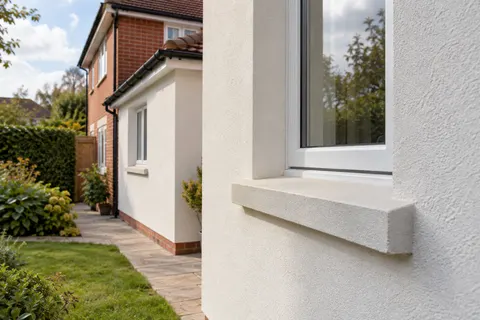
Repair texture matters to the respray result. A patch that is smoother, rougher or higher than its surroundings can remain visible through an opaque coating. The colour may become consistent while the physical variation remains. If the project seeks a different surface rather than simply a new shade, consider whether a suitable new finish or wall-rendering scheme is required. The scope should not promise a coating can perform the work of a new render build-up.
| Operation | Purpose | What to establish |
|---|---|---|
| Assessment | Identify the existing surface and defects | What can remain and what needs investigation |
| Cleaning | Prepare the surface appropriately | Method suited to the material and setting |
| Repair | Replace failed material and resolve details | Extent, compatible materials and texture |
| Coating | Provide the agreed decorative finish | Product, colour, preparation and application method |
| Completion | Return the exterior to normal use | Fittings, protection, clean-up and care information |
Choose the product for the wall beneath the colour
Traditional render, modern mineral finishes and insulated façades can have different coating requirements. The new product should suit the actual construction and retained layers. For lime work, compatibility needs particular attention; for an insulated system, follow the relevant system guidance. General descriptions such as flexible or breathable do not establish suitability on their own. The specification should connect the product to the assessed background and intended use.
A monocouche surface may also need manufacturer advice before decoration. Retain the existing product identity where it is known and consider its condition, rather than assume any exterior masonry paint is appropriate. If the original finish cannot be identified, the proposal should explain how suitability will be established. The owner does not need to choose a technical coating from a catalogue unaided; the useful requirement is a reasoned specification supported by the relevant guidance.
Approve colour alongside the retained materials
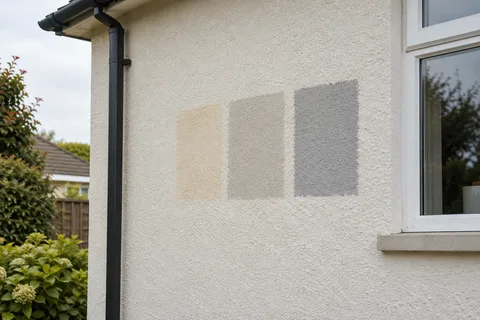
View a sample on a representative area with the roof, windows and exposed masonry in sight. The same shade can appear different in sunlight and shade or beside different brick colours. A sample also shows whether the preparation leaves an acceptable texture. Decide the boundaries at returns, panels and fittings, including items that remain contrasting or uncoated. A simple marked image can prevent assumptions about what the phrase entire exterior includes.
If two elevations have different existing textures, discuss whether matching colour alone will provide the desired relationship. A close visual match may not be realistic, and a deliberate distinction can sometimes be clearer. Keep the approved product and colour reference with the scope. The sample should represent the proposed method and background rather than an idealised smooth panel that will not exist on the property. This gives both parties a practical reference when reviewing the finished work.
Fit application to the site, not just the surface
Spraying is one application method, not a separate diagnosis of what the wall needs. The chosen product, access and surrounding property determine whether it is appropriate. Control of overspray and protection of glazing, paving, vehicles and neighbouring areas belong in the plan. Some details may require another method. An occupied entrance or narrow passage can affect the arrangement, and temporary restrictions should be explained before work starts.
Preparation and repairs can take longer than the visible coating stage. The programme should allow the required intervals and suitable conditions for the products. Associated fitting changes should be completed in the right order so the new colour is not immediately damaged by a later alteration. For a wider house project, coordinate the recoloured areas with any elevations receiving replacement render. That keeps the same visual scheme from concealing different and potentially conflicting work sequences.
Leave a surface that can be maintained intelligently
At completion, inspect coverage, boundaries and the treatment of fittings against the agreed scope. Keep the coating identity, colour and relevant preparation record. A later clean or repair should begin with that information rather than add another unknown layer. The Crewe homepage links recolouring with the other services, and our respray quotation article explores the scope distinction further. A successful respray changes the appearance of a suitable wall; its value depends on the assessment and preparation that made the new coating appropriate in the first place.
Common questions
Can a respray make rough render look smooth?
A coating generally follows the texture beneath it. A smoother result may need a different suitable build-up and more preparation. Discuss the physical surface you want, rather than assume an opaque colour hides differences in grain, level or profile.
Should repairs be included in every respray price?
The quotation should state the actual repair allowance and how additional findings are handled. Some walls need little remedial work, while others need substantial attention before coating. A clear scope is more useful than assuming a broad respray label includes every possible defect.
See housing and planning information for Crewe and nearby places, including the source and geography behind each figure.