Choose the repair around the existing fabric
Lime Rendering Crewe | Materials for Compatible Exterior Repair
An older wall may need a different treatment from a modern extension on the same property. Lime rendering can be relevant where the masonry and retained materials require a compatible covering, but the word lime does not specify the whole job. The proposed binder, aggregate, layers and finish should follow an assessment of the actual wall. That allows the work to preserve suitable material and address defects without defaulting to the hardest available repair.

On this page
Read the layers already present
The existing surface may contain original render, later patches and several decorative coatings. Their condition and relationship with the masonry need to be understood before new work is selected. A uniform paint colour can conceal substantial variation beneath it. The assessment should identify what can remain, what requires repair and where further investigation is needed. It should also separate the age of the building from the age of its covering, because a traditional wall can have a much newer and potentially unsuitable finish.
Known alteration history can help explain those layers. A removed lean-to, changed window or previous leak may account for a particular patch. Provide any reliable records, but do not invent material names or dates where none are known. A limited trial may be useful to establish the background. Its purpose should be clear, with a suitable method and a plan for protecting or reinstating the area. The removal guide covers how investigation connects to the wider replacement scope.
- Stone or brick masonry Cleaned of loose material and dampened so it does not draw water out too fast.
- First (scratch) coat Often haired; scratched to give the next coat a key.
- Second (floating) coat Applied once the first has firmed up; follows the line of the wall.
- Finish coat Thin final coat, kept damp and shaded while it cures.
- Limewash or mineral paint Optional decoration that keeps the wall permeable.
Wall on the left, finish on the right. Not to scale: coats, thicknesses and primers follow the chosen manufacturer’s system and the condition of the wall.
Specify the lime rather than relying on the label
Lime putty and natural hydraulic lime have different setting characteristics. The appropriate choice depends on the fabric, exposure and intended method, along with the other components of the render. A specification should identify the material and explain the build-up. A higher strength classification is not automatically a better choice for softer masonry. The useful comparison is compatibility with the wall and the ability to carry out the proposed method properly, not a simple ranking of products by apparent toughness.
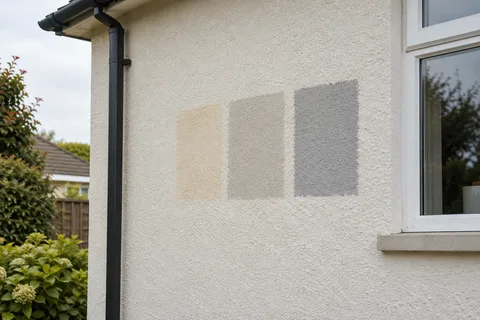
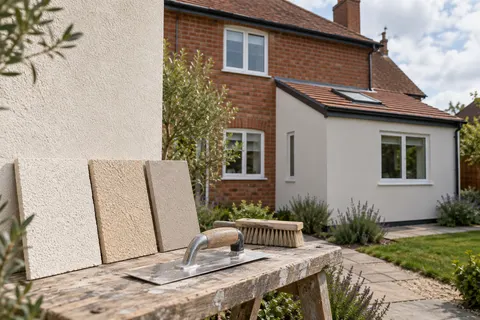
The aggregate and finishing method also affect the surface. A sample should represent the actual materials and preparation rather than simply demonstrate an attractive colour. If the work meets retained older render, the intended texture and edge need agreement. A compatible local repair can remain visible, especially beside weathered material. That may be an acceptable and proportionate result. The repair page explains how to discuss appearance without assuming every patch should disappear through a larger new covering.
| Part | What the specification should identify |
|---|---|
| Fabric | Masonry and retained materials receiving the work |
| Preparation | Repairs, selective removal and background treatment |
| Materials | Binder, aggregate and intended layers |
| Appearance | Texture, sample and compatible colour treatment |
| Programme | Protection, curing and access arrangements |
| Maintenance | Suitable future cleaning, repair and decoration |
Balance removal against the fabric it may disturb
A hard later layer can create problems on some traditional walls, but taking it off can damage the material beneath. The decision needs to consider both outcomes. A trial can help establish adhesion and removal risks, with the method revised if it harms retained fabric. Complete stripping should have a reason; selective retention should also be justified by condition and compatibility. Neither approach becomes correct simply because it is described as more thorough or more conservative.
Where the property is designated or contains important historic features, the appropriate advice and approvals need to be considered before investigation or alteration. A Crewe address does not establish that requirement one way or the other. Check the actual building and proposed work. The technical specification should then fit the agreed approach, including the treatment of surrounds, bands and other retained details. A later decision about colour should not quietly expand the scope beyond the material and areas originally assessed.
Deal with water details alongside the covering
Gutters, sills, roof junctions and ground relationships can influence the condition of a wall. If a defective fitting keeps wetting an area, replacing the render alone may leave the cause in place. Identify the associated work and the trade responsible for it, then coordinate the sequence. Lime should not be presented as a universal cure for damp or a reason to ignore water entry. The wall's condition needs the appropriate assessment, with the covering selected as part of a coherent repair plan.
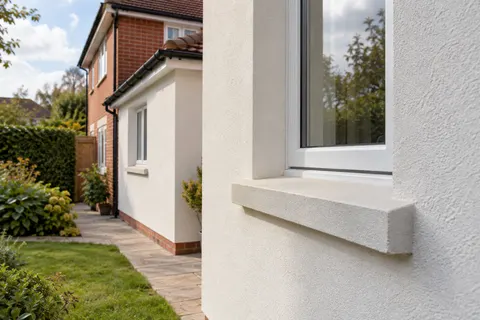
At openings and changes in construction, the new work needs a suitable junction. A traditional wall and a modern addition may require different specifications even when their colours are coordinated. The wall-rendering guide helps define the boundaries of an individual elevation. For a larger house project, show where each treatment applies and retain that information after completion. A consistent appearance is possible without pretending that all the underlying materials are the same.
Give application and curing the time they require
The selected lime system needs an appropriate method and suitable conditions while it develops. Protection and access should be included in the programme rather than added only when the weather creates a problem. The requirements depend on the actual material and site. The contractor should explain the stages and any necessary restrictions around the work. The owner does not need a mixing recipe; they need a practical proposal that allows the specified method to be followed.
Occupation and other trades need to fit that sequence. New fittings, paving or roof work should not damage an unfinished or newly completed surface. If the project pauses after preparation or between layers, the temporary arrangement should be clear. That is especially useful where a narrow route remains in everyday use. The size of the visible area does not determine how quickly all stages can be completed, so programme expectations should follow the material and conditions rather than area alone.
Keep later decoration compatible with the repair
The final treatment may be limewash or another appropriate finish, depending on the specification. Retain that information so future recolouring does not introduce an unsuitable coating over the work. Keep the sample reference and note which areas were repaired or retained. At completion, review junctions and associated fittings as well as texture and colour. The Crewe homepage connects the service options. Lime rendering is most useful as a considered response to the building's fabric, supported by a clear method and care plan rather than a broad promise attached to a traditional material name.
Common questions
Does every pre-1919 property need lime render?
Age alone does not provide a specification. The wall construction, existing materials, condition and proposed work need assessment. Lime may be appropriate in a compatible repair, but the choice should follow the actual building rather than a date category in local housing data.
Can lime render be painted later?
Any later coating should suit the installed system and the building. Keep the specified finish and maintenance guidance, and check compatibility before changing it. An ordinary exterior paint should not be assumed suitable merely because the lime surface appears dry and sound.
See housing and planning information for Crewe and nearby places, including the source and geography behind each figure.