The trial should change a decision, not just open a patch
How a Removal Trial Can Change the Replacement Render Brief
A small opening in an old covering can reveal information that changes the proposed replacement. It may show sound masonry, unexpected repairs, a weak background or a removal method that damages the material beneath. The value of the trial is in what happens next. Agree the questions it is intended to answer and connect the findings to the specification. Removing a patch without a decision process can leave a hole in the wall while the important assumptions remain unchanged.

On this page
State the uncertainty before choosing the trial location
The question may concern adhesion, the material beneath the covering or the condition around an altered opening. Different questions can require different locations. A trial in an accessible corner may say little about an area with a visibly different repair history. The responsible contractor or professional should select a proportionate approach that represents the relevant condition, with suitable permissions and care where needed. The owner should not be encouraged to chip off material independently to provide an early answer.
Photographs and a marked elevation can record where the trial is proposed and why. Identify nearby fittings, retained features and any access constraints. If several backgrounds are suspected, explain how the investigation will address that uncertainty rather than assume one patch represents the whole house. The pebbledash-removal guide places the trial within the wider operation. Its purpose is to inform a repair and replacement plan, not merely demonstrate that a covering can be detached from one part of the building.
Record the result in terms that affect the work
Useful findings include the layers present, the apparent background, how the covering detaches and what damage or weakness is revealed. Keep the location and scale clear in photographs. A close-up of loose fragments without context may be difficult to interpret later. The record should distinguish what was observed from what is inferred, and identify any question that remains unresolved. A small trial does not justify a confident description of every concealed area unless other evidence supports that conclusion.
The relevant person should then explain how the finding affects the proposal. Sound consistent masonry may support the intended system after its specified preparation. Mixed repairs may require a different treatment at junctions. A vulnerable background may make extensive removal less appropriate than expected. Those are decisions to assess, not automatic outcomes of a single visual clue. The repair page explains why both the affected layer and the supporting construction need to be understood before a local method is chosen.
| Finding | Question for the revised brief |
|---|---|
| Covering releases cleanly | Does the exposed background meet the selected system's requirements? |
| Masonry face is damaged during removal | Should the method or extent change? |
| Several materials appear beneath one finish | How are preparation and junctions specified? |
| An earlier coating remains | Is it compatible or does it require further treatment? |
| Local weakness extends beyond the patch | What further assessment defines the repair boundary? |
| Condition differs from the original assumption | Which scope and programme items need revision? |
Treat removal damage as information, not an acceptable hidden cost
If the trial harms the background or a retained feature, review the method before repeating it. The fact that a new finish will cover the wall does not make avoidable damage irrelevant. Traditional fabric can require particular care, and a hard covering may be strongly bonded to softer material. The lime guide discusses compatibility and the balance between removal and retention. A more extensive stripping operation is not automatically a more thorough or better repair.
The revised approach may involve selective removal, another method or additional specialist input. It may also confirm that the original scope remains suitable. What matters is that the trial has a real opportunity to influence the decision. Carrying out a test after the full method has already been treated as fixed reduces it to a formality. The owner should receive a clear account of the finding and the proposed response before wider work commits the building to the same outcome.


Reassess the replacement system against the revealed wall
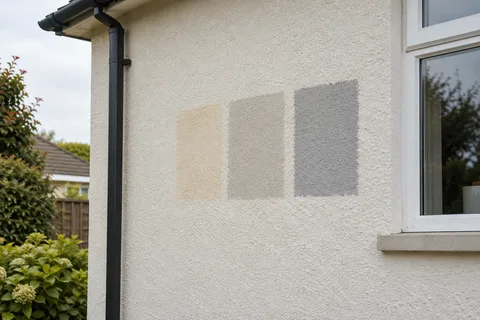
A preferred appearance can remain part of the design while the technical specification changes. Silicone and monocouche require suitable complete build-ups, and the trial may affect what preparation is needed beneath either. Traditional masonry may call for another compatible approach. The selected product should follow the background and the building's requirements rather than be defended solely because a colour sample was already approved before investigation.
This does not mean every trial forces a complete redesign. It means the original assumptions should be checked explicitly. If they hold, retain the evidence and proceed under the agreed method. If they do not, update the specification and any relevant sample. A colour reference detached from the revised material can become misleading. The owner should know which parts of the proposal remain unchanged and which have been reconsidered because the wall provided better information than the initial view allowed.
Update the quotation and programme where the work changes
Additional repairs, altered preparation or a different removal method can affect the scope and timing. Describe those changes through the contract's agreed process, separating necessary work from optional improvements. A marked area and concise explanation help make the revision understandable. Do not rely on a broad statement that the wall is more difficult than expected when the actual finding can be described. Equally, a limited trial should not be used to promise that no further concealed condition can arise during the main operation.
The programme should include protection and the sequence after removal. If the investigation leads to a pause, the trial area needs an appropriate temporary arrangement and a plan for reinstatement. Identify who is responsible for it. An exposed patch should not become forgotten while the owner compares revised options. This is especially important on an occupied elevation or beside a fitting where the original covering contributed to the local weathering detail. The appropriate response belongs to the assessed construction and site, not a generic patching instruction.
Keep the trial evidence with the finished specification
At completion, the trial record helps explain why a particular method or material was selected. Retain useful photographs, the findings and the agreed revision alongside the installed product information. That can help a future repairer understand different treatments on the same elevation. It also avoids an old trial photograph being mistaken for evidence that the entire house was stripped or repaired in the same way. The record should show its extent and limits as clearly as its result.
For one face of the building, the wall-rendering guide helps define the final boundaries. A whole-house scheme can coordinate several different backgrounds without pretending one trial describes them all. The Crewe homepage links the wider options. A useful trial reduces guesswork and improves the next decision. Its success is measured by the clarity it adds to the replacement brief, rather than by how quickly a patch of old material disappears.
Compare the original assumption with the revised finding
A useful trial summary can be brief: the proposal assumed a particular retained background, the opening revealed a different material, and the revised method addresses that difference. Include the area to which the finding applies and what remains uncertain elsewhere. Avoid a broad conclusion such as all walls are unsuitable when only a limited patch has been investigated. Equally, do not retain the original preparation allowance without explanation if the trial shows that its assumptions no longer hold. This comparison makes the purpose of the investigation visible to the owner and provides the contractor with a defensible next step. It also helps separate a necessary technical revision from an optional change to the appearance that happens to be discussed at the same time.
Common questions
Does a successful trial prove the same method is suitable everywhere?
Not necessarily. Different elevations or altered areas can contain different materials and conditions. The trial's representativeness and limits should be explained, with a process for further findings during the main work. One clean patch is evidence about that patch, not automatic proof of uniform construction.
Can the owner choose the finish before the trial?
Visual preferences can be developed early, but the final system should remain subject to the background assessment. A trial may change the preparation or material choice. Keep the desired appearance and the technical specification connected without allowing an early colour decision to override suitability.
See housing and planning information for Crewe and nearby places, including the source and geography behind each figure.